Gardening for Wildlife with Green Roofs and Floral Meadows

Q Lawns are showcasing their Enviromat sedum matting and their Meadowmat wild flower matting at the Garden Press Event in London on 2nd February 2012

London, 19 January 2012 : Enviromat Sedum Matting is a relatively lightweight solution to creating a living green roof on garden buildings and domestic roofs.

Enviromat Sedum Matting
Comprising seven species of drought tolerant sedums growing on to a patented matting system, Enviromat creates a wonderful habitat for invertebrates and with its long flowering period, helps support beneficial insects such as butterflies and bees.

Enviromat is easily installed by a competent DIY’er or, for those not confident of working at heights, Q Lawns offers a green roof installation service.

Meadowmat Wild Flower Matting
Meadowmat Wild Flower Matting takes the stress out of establishing a wild flower meadow in the garden. 34 species of native grasses and flowering plants are established on to a matting system that is simply unrolled onto prepared ground to create a dense sward of mixed plants. Depending on the time of year, Meadowmat may well be in flower just a few weeks after installation, providing a rich source of nectar for beneficial insects and a great hiding place for invertebrates, small mammals and amphibians.

Meadowmat maintenance is simple and cost effective. Once established, the plants need minimal attention for six months of the year and only the occasional trim between October and April for neatness.

Search on YouTube for our videos about Meadowmat and Enviromat or visit our websites and blog at:
www.meadowmat.com
www.meadowmat.blogspot.com
www.enviromat.co.uk

The Garden Press Event is for members of the media only and members of the Garden Media who whish to attend better book their places now. The event is only a short time off now.

© 2012

TurfEx Releases New Self-Propelled Rideable Sprayer/Spreader

A New Concept in Turf Products, the TurfEx RS7200 Riding Sprayer/Spreader Maximizes Efficiency, Productivity and Precision Application.

Madison Heights, Michigan: TurfEx introduces its first self-propelled spreader/sprayer combination unit. The new RS7200 Spread-N-Spray boasts high capacity, superior material application and high-performance handling.

gI_69269_RS7200

Designed for smooth, safe operation, the new TurfEx RS7200 Spread-N-Spray is well balanced and has a low center of gravity.

The Spread-N-Spray is powered by a 200cc Honda GX200 engine with a 2:1 ratio gear reducer. Its heavy-duty transmission includes two forward gears, plus neutral and reverse. The unit comes with a hand-operated transmission disc brake, as well as a foot-controlled sulky band brake.

The large-capacity hopper accommodates 150 pounds, or 3 cubic feet, of material, which can be spread up to 11 feet wide. Additionally, the balanced tank system holds 17 gallons of liquid and contains just one fill port for quick, convenient refilling. The sprayer is powered by a 2-gpm pump, and the low-pressure nozzles offer multiple spray patterns to apply liquid up to 11 feet wide. A spot sprayer is also provided for weed-spraying applications.

Designed for smooth, safe operation, the machine is well balanced and has a low center of gravity. It easily handles rough or uneven terrain, thanks to the sulky’s sealed bearing pivot. A centrally located kill switch and lanyard are added for extra safety.

The Spread-N-Spray offers a variety of standard ergonomic features to enhance operator comfort and ensure high productivity. These include cushioned handlebars and an anti-fatigue foot mat, as well as user-friendly controls.

Furthermore, maintenance is kept to a minimum on the Spread-N-Spray. There are few moving parts and cables to service, and the engine is easily accessible. Additionally, after every 25 hours of operation, the waterproof tachometer provides a visual indicator to lubricate the machine.

Other standard features include a side deflector, fluid-filled tires, extra nozzles, flag storage and a built-in cup holder. The Spread-N-Spray is backed by a two-year limited warranty.

In addition to the Spread-N-Spray, TurfEx offers a full line of spreaders, topdressers, sprayers, brooms, dethatchers and other gear for the turf industry.

TurfEx is a product division of TrynEx International. Other TrynEx brands include SnowEx winter maintenance equipment, and SweepEx broom attachments.

For more information visit http://www.trynexfactory.com.

This press release is presented without editing for your information only.

Full Disclosure Statement: The GREEN (LIVING) REVIEW received no compensation for any component of this article.

This article is for your information only and the GREEN (LIVING) REVIEW does not (necessarily) approve, endorse or recommend the product, service or company mentioned.

The Park... the newest superhero

Introducing the – drum roll please – the Park, the newest superhero. He tackles crime and increases happiness. And he is? The Park!

By Michael Smith (Veshengro)

Parks fight crime with peace and flowers and trees.

CaptPark We all know that parks are lovely places to visit and make you feel calm and relaxed but now there is actual proof of how great they are and how much they do for us.

A new study in the American Journal of Epidemiology analyzing parks in Philadelphia has proven that not only does turning abandoned parks into beautiful grassy spots make the place look pretty it also reduces crime. Gun crimes, vandalism and criminal mischief all dropped significantly in a study over 10 years in over 4,000 reclaimed spaces.

The well tended parks let people know that someone cares about the places and therefore people are less likely to commit crimes in the area for fear of getting caught. It's easy to see that parks are wonderful places!

Want to spruce up your community and spread some good will? Get involved, where possible, in caring for your parks and open spaces.

The findings are not all that new, really. CABE, the Commission for Architecture and the Built Environment, when it still existed, found the very same in that areas with good and vibrant parks had less crime and more happiness.

And, I am sure, aside from the fact that they knew that open spaces and parks would do wonders for the well-being of people – the very reason publicly-owned parks and open spaces were created under the Public Health Acts by the Victorians – they knew too that parks and open spaces where people could go and enjoy Nature, even if it was somewhat regulated in many early parks, would have many other benefits for society.

It is therefore well outside my comprehension why municipalities always consider scrapping the parks and open spaces and especially their proper management first when it comes to spending cuts.

They do not seem to realize and understand those findings, by so many bodies by now, of the benefits of parks and open spaces and that those benefits then means they don't have to concentrate on tackling other issues.

Having said that, though, it only works if and when people have a sense of ownership of such spaces and that is best achieved by involving everyone in the running and maintenance, under the auspices of the municipality, though that latter point may not always be necessary.

In fact, in some places in the British capital it has been proven that a neighborhood is well capable of managing the parks and open spaces. While the parks and open spaces, in those cases, have remained in public ownership, as the must be, especially if they came about due to the Public Health Acts, the management does not (always) have to be provided by the councils.

When management has to be reduced vandalism and other crime often moves in but this can be reduced and even eliminated by involving the community in their parks and open spaces.

It has been proven in some of the toughest neighborhoods in Britain and, so I understand, in the US, and thus it can and will work in your area.

© 2011

IOG INDUSTRY AWARDS HONOUR UK GROUNDS EXPERTISE

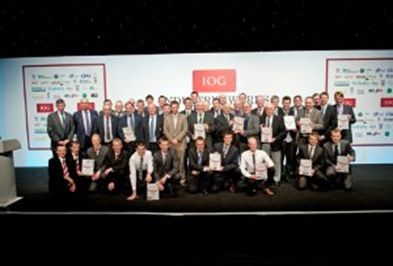
MWC 3437b_web Almost 350 of the UK’s and Europe’s leading groundscare experts from both the professional and volunteer sector, as well as dignitaries from the governing bodies of sport and influential sports administrators, have honoured the expertise, dedication and passion of the country’s grounds profession at the Institute of Groundsmanship (IOG) Industry Awards.

The packed Oscar-style ceremony at Bolton’s Reebok Stadium, home of Bolton Wanderers FC, recognised leadership, innovation and outstanding achievement across every aspect of groundscare – from grassroots pitches to professional stadia, including all types of public and private sports venues, and it highlighted the progress of young/student grounds professionals as well as product innovation.

Hosted by talkSPORT Radio’s Mark Saggers, the sell-out IOG Awards followed a day-long series of IOG Conference presentations by some of the biggest names in the industry from both sides of the Atlantic.

The winners of the 2011 IOG Industry Awards are:

Grass Roots Sports Ground of the Year – sponsored by Bayer

Winner: Heaton Sports Club

Finalist: Leamington FC, Warwickshire.

The facilities at Stockport-based Heaton Sports Club embrace cricket, rugby, tennis and lacrosse, including a four-lane cricket practice net area.

Volunteer Sports Grounds Management Team of the Year

Winner: Cleckheaton Sports Club, West Yorkshire

Finalist: Miskin Manor Cricket Club, Llantrisant, Wales.

Cleckheaton’s two-man team looks after five acres including cricket square and outfield (Bradford League) plus two floodlit bowling greens.

Volunteer Sports Groundsman of the Year – sponsored by Mark Harrod Ltd

Winner: Keith Hughes, Menai Bridge Cricket Club, Anglesey, Wales

Finalist: David Arthure, Swansea Civil Service Cricket Club.

Keith is part of a team that looks after a main cricket ground and two-bay artificial net facility at Menai.

Public Sector Sports Ground of the Year

Winner: Sunderland City Council

Finalist: Fawley Parish Council, Southampton.

Sunderland City Council’s 3.5 hectare Billy Hardy Sports Complex accommodates four cricket and five football teams.

Public Sector Outdoor Facility of the Year

Winner: Stanley Park Sports Ground, Chippenham

Finalist: Mayow Park, Sydenham, London.

The 50-acre Stanley Park Sports Ground is home to over 70 sports teams and has 18 playing surfaces.

Environmental Project of the Year – sponsored by Ransomes Jacobsen

Winner: Ashton on Mersey Cricket Club, Cheshire

Finalist: Sheffield University.

Included among the developments at the Ashton on Mersey Cricket Club is the installation of solar photovoltaic and solar thermal systems, which have eliminated the club’s electricity bill and, indeed, even allows the club to ‘return’ energy to the National Grid.

Professional Football Training Ground Team of the Year – jointly sponsored by AFT Trenchers and Cleveland Land Services

Winner: Manchester City FC

Finalists: Charlton Athletic FC, Crewe Alexandra FC, Nottingham Forest FC.

Every pitch at Manchester City FC’s Carrington training site has this year undergone major renovations. The groundscare team there looks after six natural turf pitches and an artificial pitch, as well as the accompanying lawns and gardens.

Best Maintained Artificial Pitch of the Year – jointly sponsored by Charterhouse Turf Machinery and Kubota

Winner: Radley College, Oxfordshire

Finalist: King Edward’s School, Surrey.

The Astro turf pitch at this independent boarding school for boys aged between 13 and 18 plays a key role in enabling the Radley pupils to undertake a wide range of sports at the 800-acre site, including rugby, hockey, cricket, tennis and athletics.

Innovation in Grounds Maintenance – sponsored by Sanli UK

Winner: GreenMech, wood chipper

Finalist: Etesia, ride-on mower.

Greenmech’s Quad Chip 160 wood chipper is described as a new generation of wood chipper, and features a number of innovative features for improved use and operator safety: it has a 360 degree turntable, to ensure operators are kept safe, plus low noise operation.

Most Promising Sports Turf Student of the Year – sponsored by Sherriff Amenity

Winner: Adam Shoesmith, Myerscough College, Preston

Finalist: Will Graves, Merchant Taylors’ School, Middlesex.

Adam, who is described as “a very dedicated and hard-working student”, has successfully completed Year 1 of his FdSc sports turf course and gained a scholarship to pursue his studies further to BSc level.

Young Groundsman of the Year – sponsored by Rigby Taylor and Top Green

Winner: Niall Hazelhurst, Bolton Wanderers FC

Finalist: Andrew Flanagan, Hartlepool United FC.

Niall is a full-time member of the Reebok team and is currently accredited to NVQ Level 3 in Amenity Horticulture Sports Turf. Included in the Award’s decision-making process was the fact that Niall had an extraordinary introduction into groundsmanship, having been heavily involved in the initial build and hand-over of the club’s Eddie Davies Football Academy. His commitment during this period has been singled out as “outstanding”.

Independent Schools & Colleges Sports Ground of the Year

Winner: Charterhouse School

Finalist: Bolton School, Lancs.

Included in the sports facilities at Godalming-based Charterhouse are football, hockey and cricket, as well as swimming and athletics, golf and sailing, rugby and shooting, racquets, tennis, squash and fives plus hockey, lacrosse, netball and tennis.

Spectator Sports Ground of the Year – sponsored by the AELTC, ECB, the Football Association, Football Foundation, the Lawn Tennis Association, the Premier League, Rugby Football League, Rugby Football Union and Sport England

Winner: York Racecourse

Finalist: The Liberty Stadium.

York – the Northern racecourse of the Year - is one of the premier tracks in Europe and it can trace a fascinating history back to Roman and Viking times. Today, the racecourse welcomes around 350,000 race-goers each season who enjoy around 118 races over 17 race days. Included among recent improvements at the 10-hectare site are a comprehensive trackworks scheme plus redeveloped lawn and floral display areas.

Professional Sports Grounds Management Team of the Year – jointly sponsored by Campey Turf Care Systems and Imants BV

Winner: Manchester City FC

Finalist: Hurlingham Club, London.

The award judging process embraced the activities of Manchester City FC’s complete groundscare team across its sites – the Etihad Stadium, the Carrington training ground and the Platt Lane academy.

The Alex R Millar IOG Professional Football Groundsman of the Year – sponsored by British Sugar (Topsoil) and DLF/Johnsons Seed

Winner: Antony Haywood, Chesterfield FC

Finalists: Tommy Cumming, Inverness Caledonian Thistle FC; Ewan Hunter, Nottingham Forest FC; Lee Jackson, Manchester City FC; David Mitchell, Carlisle United FC.

This Award has been judged on criteria that included Antony’s effective use of resources, budgetary control, presentation and housekeeping standards, as well as environmental considerations at the club’s B2net stadium.

The Groundsman’s Groundsman of the Year

Winner: Les Gibbs, Glamorgan University

Finalists:

Darren Baldwin, Tottenham Hotspur FC

Jonathan Calderwood, Aston Villa FC

Dan Duffy, Swansea City FC

David Hodgson, Kirkstall Educational Cricket Club, West Yorkshire

Nick James, Heaton Mersey Cricket Club, Stockport

Lee Jackson, Manchester City FC

Ed Mowe, Leicester City FC

Phil Williams, Cardiff City FC.

As the university’s Grounds Manager, Les Gibbs is in charge of 22 acres of sports surfaces – and testament to his groundsmanship expertise is the fact that the site regularly accommodates national and international rugby and football teams as well as the Cardiff City FC academy plus, of course, the sporting needs of the university students.

Lifetime Achievement Award – sponsored by Everris

Winner: Richard Campey, Managing Director, Campey Turf Care Systems

Richard has spent the past 25 years promoting a strategy of best practice sports ground renovation and maintenance, which has not only enabled him to build a successful company but, importantly, the policy has also helped to ensure that numerous sportsmen and women around the country have at their disposal the best possible playing surfaces.

In addition, his ‘natural instinct’ for the turf care business has also earned him a reputation as someone who sets industry standards – he was, for example, the person who in 1997 introduced to this country the revolutionary Koro machine. The impact that this machine has had on the way pitches are managed is profound – and koroing is now a recognised generic term in the industry.

Source: Wildish Communications Ltd

Versatile Kubota M108S Agricultural Tractor Is Right For Every Job

Kubota tractor In tough economic times, versatility is as important as price, which is why the Kubota M108S agricultural tractor is a firm favourite with farmers and contractors alike.

Part of the hugely popular Kubota M Series, the M108S has been designed to offer the agricultural sector power, performance, versatility and reliability – and all at an affordable price.

It offers exceptional pulling power and unparalleled levels of productivity which make it equally suited for use on livestock, dairy, mixed use or arable farms. Powered by Kubota’s 108hp new common rail engine, the M108S combines a 32 x 32 gearbox with hydraulic shuttle, swing shift and dual speed for smooth and progressive directional changes, as well as on demand 4WD to ensure exceptional traction and efficient braking.

The engine itself has been designed to reduce fuel consumption, which together with its high power to weight ratio means it is very economic to run.  What’s more, with a 175 litre fuel tank, this tractor offers hour after hour of efficient working without the need to refuel.

Fuel efficiency is complemented by Kubota’s unique cooled EGR (Exhaust Gas Recirculation) system, which reduces emissions by diverting exhaust gas through a cooler and returning it to the combustion chambers.

Read more here…

IT’S JUST NOT NATURAL!

By Michael Smith (Veshengro)

The Institute of Groundsmanship (IOG) has made clear its serious concerns about any replacement of natural turf with artificial turf in professional sport.

IOG Chief Executive Geoff Webb stated: “Grass is the natural surface for our professional sports. It’s what players and fans want. Natural grass – properly maintained to governing body standards - provides the optimum playing surface today.

We recognise the improvements made with artificial playing surfaces, due to better technology. But even bigger strides have been made with grass. The standard of natural turf is a testament to the skill of the many dedicated, forward-thinking and experienced groundsmen; and they are strongly backed by a multi-million pound turf care industry that is the envy of the world. Together, this industry and the world’s best groundsmen are constantly improving and advancing the technologies and techniques needed to enhance playing surfaces.”

The IOG has a number of concerns:

  • That artificial turf should not be used as an excuse to save on maintenance or, indeed, to replace the need for a groundsman. The high maintenance needs of artificial surfaces must never be under-estimated. These are not ‘all weather surfaces’;

  • Some sports clubs’ interest in installing artificial surfaces is linked to driving commercial revenues, with real risk to playing quality and customer satisfaction. The emergence of artificial turf at grass roots level is also inextricably linked to significant cut backs and under-investment at a vast majority of pitches, most of which in football are in public sector ownership;

  • Maintenance is often under-promoted at grass roots level - and suffers from under-investment rather than being viewed as an essential aspect of a club’s budget;

  • With over 20,000 sites in England alone and an estimated 45,000 pitches, despite the grant funding available there simply is not the budget for a wholesale replacement of natural grass with artificial turf.

The IOG stands by the standards of natural turf pitches at a professional level and the skill of the groundsman in producing top class playing surfaces, which are clear to see every week in various sports.

The UK has the world’s most successful football league and natural turf surfaces combined with advances in technology contribute greatly to its success - as well as to the experience for both players and supporters alike. Any large scale introduction of artificial turf into competition will damage the games and sports we all love in Britain.

The IOG will take its case to the football and rugby authorities. IOG urges all sporting bodies to seriously re-think grounds policy - and place the right emphasis on the regular maintenance of natural turf pitches and grounds - for sport’s sake.

To this all one also needs to add the consideration that the CO2 linked to artificial turf is a high one in comparison to real grass which absorbs CO2. From a green – pardon the pun – perspective artificial grass is not a good thing as it does nothing to benefit the environment; not even water retention. Unoike real grass.

The Institute of Groundsmanship (IOG) is the leading membership organisation representing grounds managers, groundsmen, grounds maintenance managers, greenkeepers and all others involved in the management of sports pitches, landscape and amenity facilities in the UK. As well as maintaining the IOG Performance Quality Standards and providing a consultancy service for sports grounds, lawn maintenance and amenity horticulture, the IOG’s extensive Training and Education programme includes cricket, football, tennis, horseracing, bowls, artificial surfaces, turf science and many other specialist subjects. It also stages the annual IOG SCOTSTURF and IOG SALTEX exhibition, Europe’s leading show for the open space profession. For more information visit www.iog.org

Produced with material issued by Wildish Communications Ltd on behalf of: The Institute of Groundsmanship with additional writing by the editor.

© 2011

RUGBY WORLD CUP BALL EXPERT KICKS OFF IOG INDUSTRY CONFERENCE

Presentations by Ian Savage, the man behind the development of the Gilbert match balls used in the Rugby World Cup 2011, and by STRI’s Richard Hayden, who will discuss the ‘Preparation of pitches for international tournaments’, have just been announced as exciting new additions to the comprehensive programme for this year’s IOG Industry Conference at the Reebok Stadium, Bolton, on December 1.

As Product Research and Development Manager at Gilbert Rugby, Ian Savage’s keynote address will focus on his fascinating role as the person responsible for the Official Match Ball at the New Zealand tournament.

He will outline how he has worked closely with international players and coaches in the development of the Virtuo ball, as well as his investigations into ball performance due to differences in stadia and ground conditions.

His presentation will also cover aspects such as aerodynamics, impact control and insights into ball performance due to external elements – weather, pitch contaminants and individual player styles. It will also provide a chance to see how the ball has developed over time to reduce the impact of different weather conditions on the playability of the ball.

In addition, STRI’s Richard Hayden is promising delegates a ‘high tempo’ presentation on the preparation of football pitches for international tournaments, drawing on his vast experience which includes the development of two new pitches in Kharkiv in the Ukraine - where the grass has to survive at temperatures of -25 degC – as well as STRI’s work at the 2010 World Cup in South Africa.

Their roles in the not-to-be-repeated programme at the ‘Building Skills, Transforming Grounds’ Sports Turf Conference further enhances the sessions that will inform and interest groundsmen at every level while also providing invaluable advice on some of the best-practice groundscare strategies in the world.

For more information about programme content, booking details and attractive package deals, visit www.iogawards.com

Source: Wildish Communications